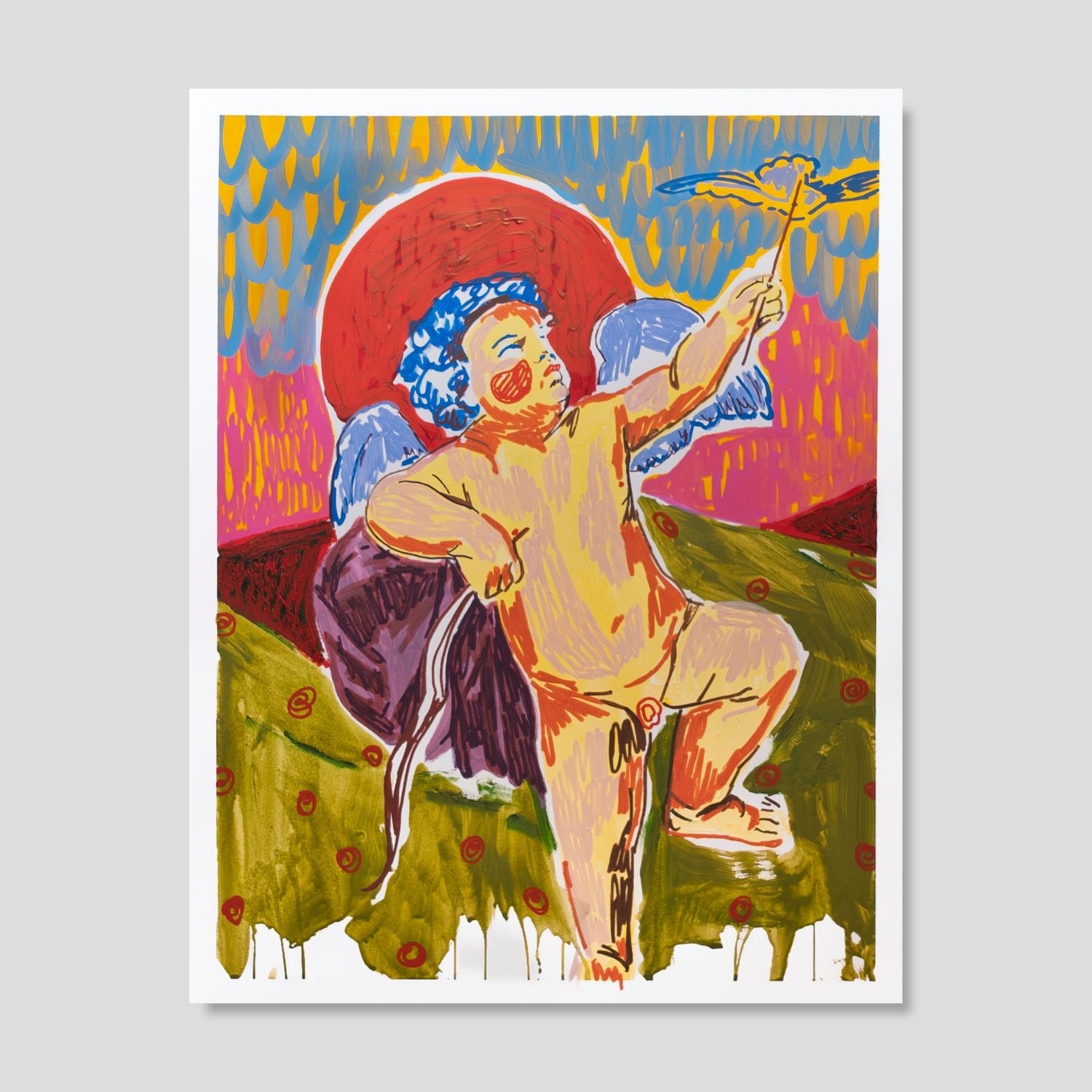
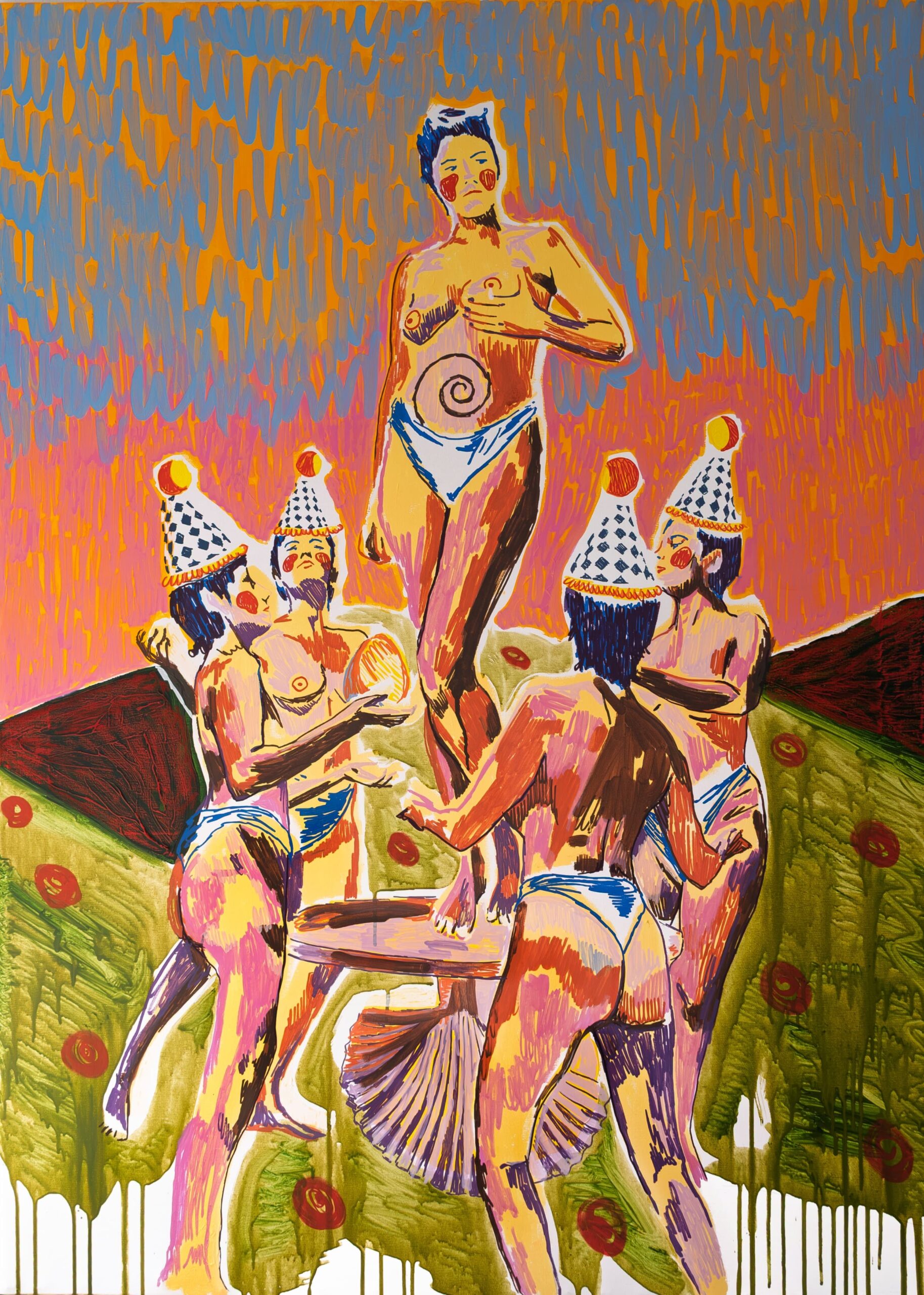
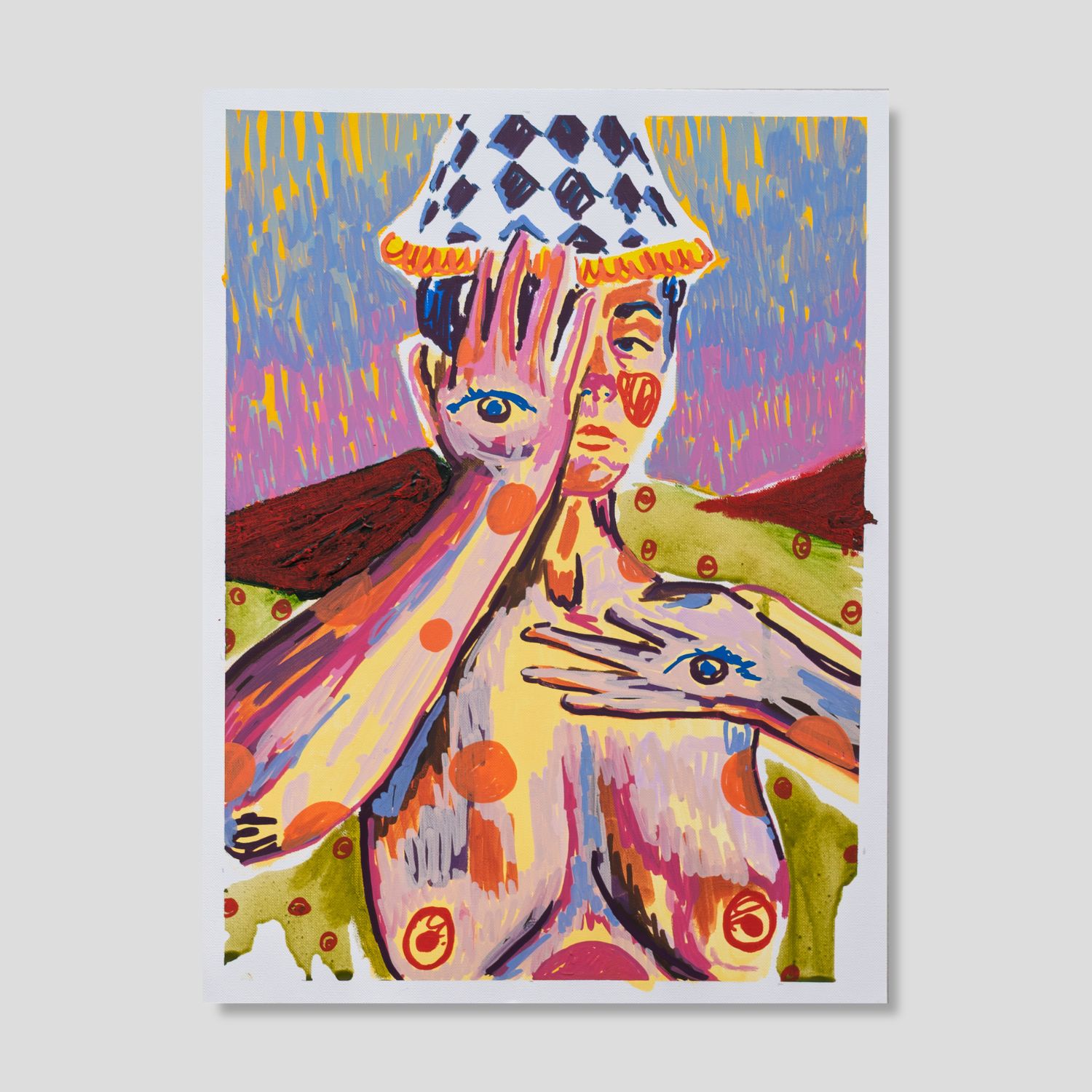
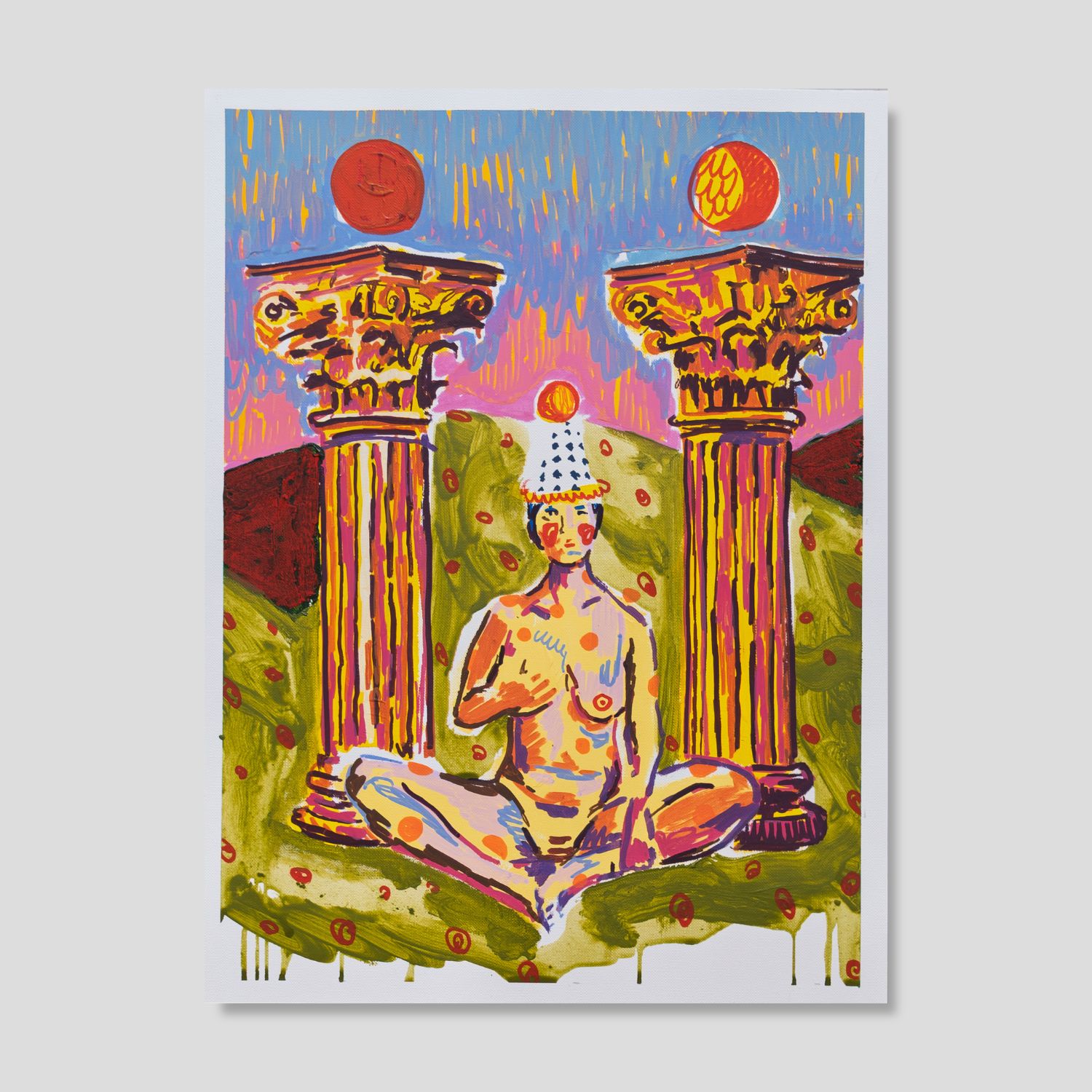
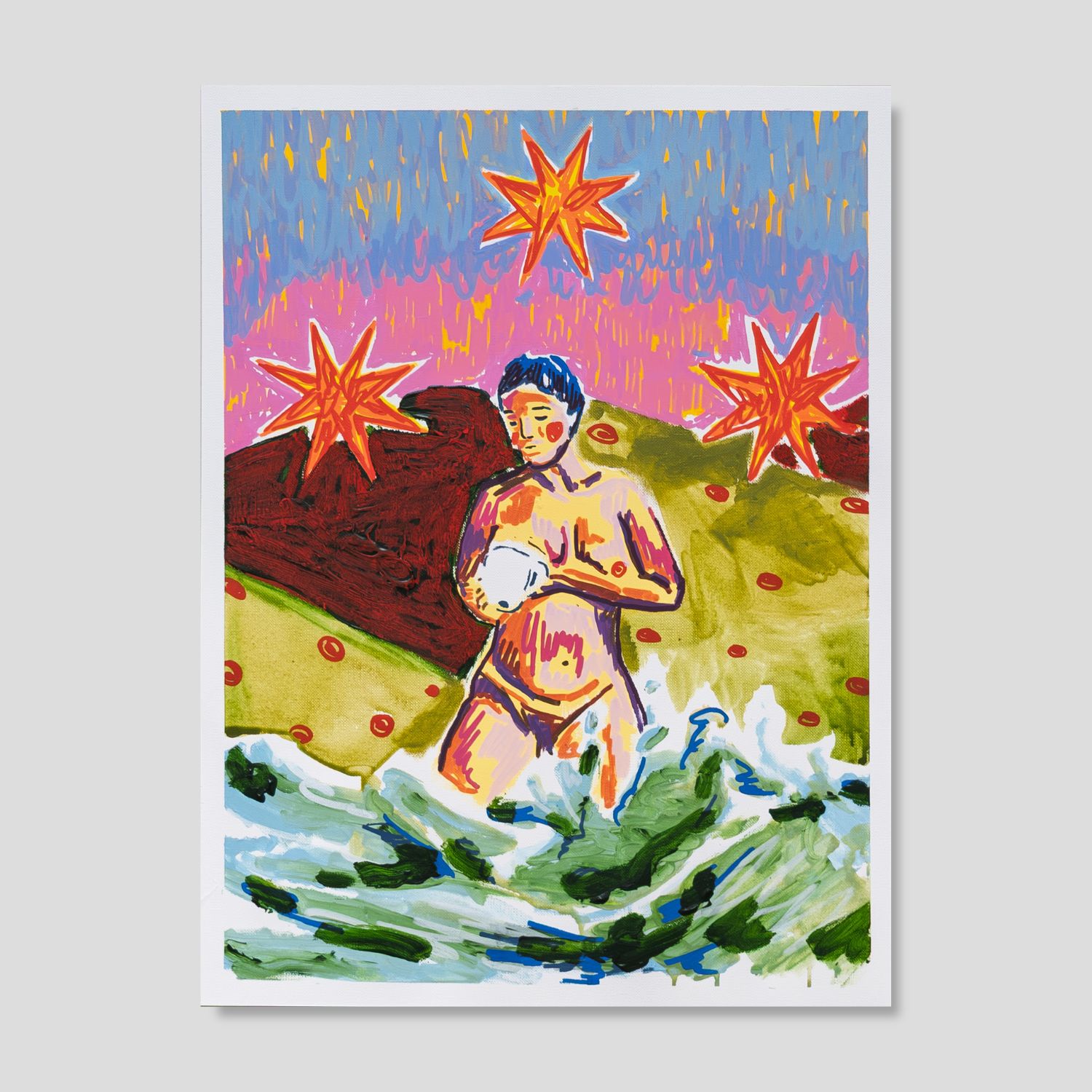
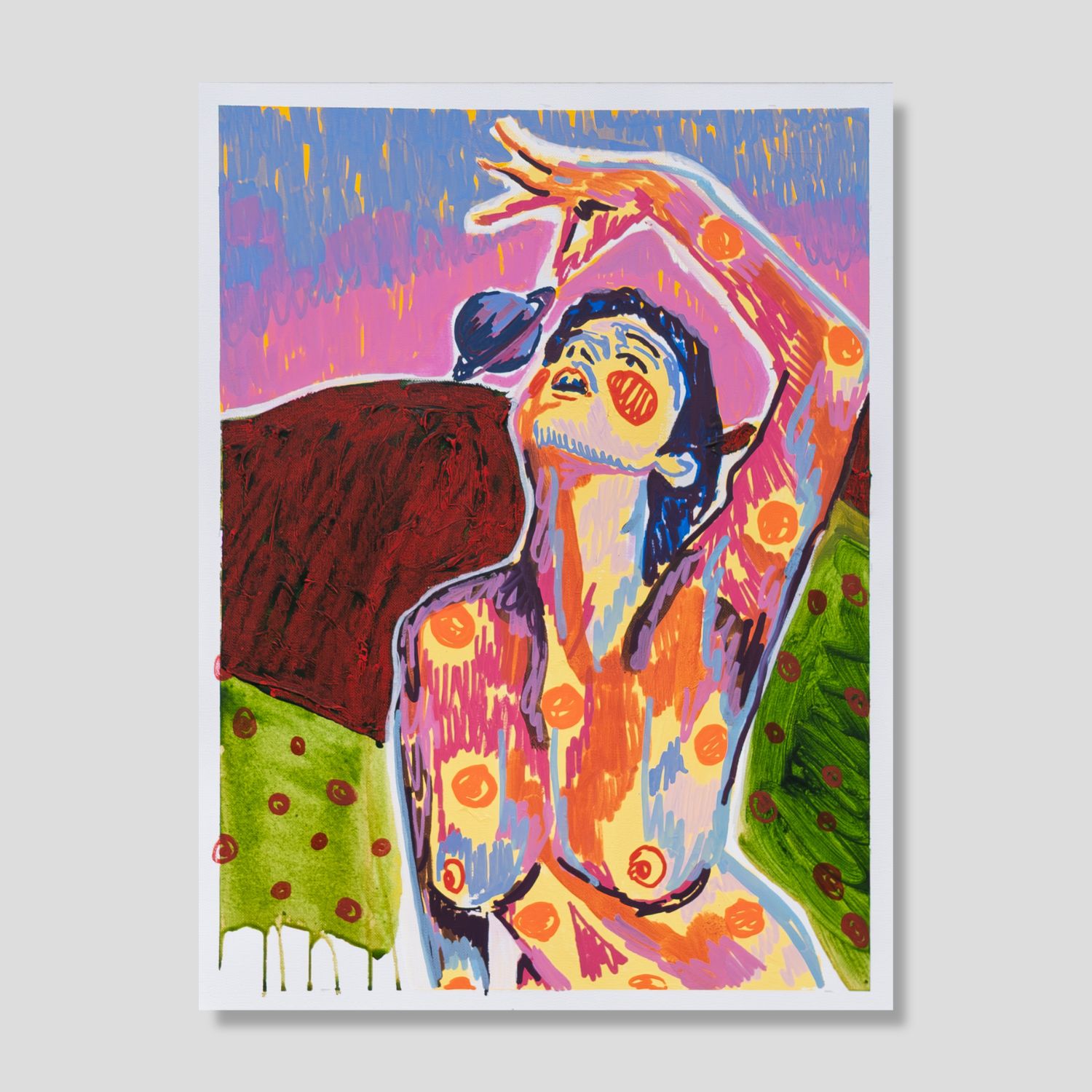
Zoa Monher (1997, Las Palmas de Gran Canaria) is a Canary Islands–born visual artist whose painting practice explores the transformation of female identity through motherhood, myth, and esoteric symbolism.
Her work begins with a question: what happens to a previous identity when a mother is born? Through painting, collage, and photography, Monher revisits images from art history and classical mythology, transforming their female figures and challenging the roles and power relations traditionally assigned to them.
Alchemy, the psychology of Carl Gustav Jung, and symbolic traditions inform her exploration of the body, identity, and the experience of becoming a mother as processes of transformation. Snakes, unicorns, water, and other symbolic elements appear throughout her compositions as images of transition, metamorphosis, and rebirth.
Zoa Monher graduated in Fine Arts from the University of Salamanca in 2019 and completed a Master’s degree in Graphic Design at UDIT in 2021. Since 2025, she has focused her career on her artistic practice. She has participated in Fermento (Espacio La Panera, Tenerife, 2025) and Hybrid Art Fair (Madrid, 2026), and in 2026 several of her works entered the Collection of the Government of the Canary Islands.
Statement
“My painting practice explores female power within esotericism through the physical and psychological transformation I experienced when I became a mother. Since then, I have been asking what happens to our former identity when a mother is born, what we inherit without choosing, and what we can transform before passing it on. I understand motherhood and parenthood as initiatory experiences that can be read through the different stages of alchemy: processes of dissolution, transformation, gestation, and rebirth. There is an intimate knowledge within parenting that only reveals itself once you have been initiated into it.
I also question why so many women have turned to similar symbols to represent their power. Do these parallels emerge from cultural memory, from bodily experience, or from the need to give form to the invisible? Alchemy, the thought of Carl Gustav Jung, and Juan Eduardo Cirlot’s studies of symbolism allow me to approach these questions without reducing symbols to fixed meanings. The stages of alchemy thus become a language through which to consider the different transformations undergone by the body, identity, and the self.
I work with digital museum archives, intervening in classical compositions through painting and introducing my own body and personal experiences as a mother. My research enters into dialogue with the spiritual and chromatic universe of Hilma af Klint, the maternal force of Mónica Sjöö, the transformative darkness of Adriana Ciudad, and Marina Vargas’s explorations of the body, symbolism, identity, and tradition.”