


JUANA GONZÁLEZ
IN GOOD HANDS
By Javier Díaz-Guardiola*
“To lend a hand”; “first-hand”; “hand over fist”; “to wash one’s hands of something”; “to get out of hand”; “hand in hand”… It is curious how many idiomatic expressions revolve around this particular part of our upper limbs.
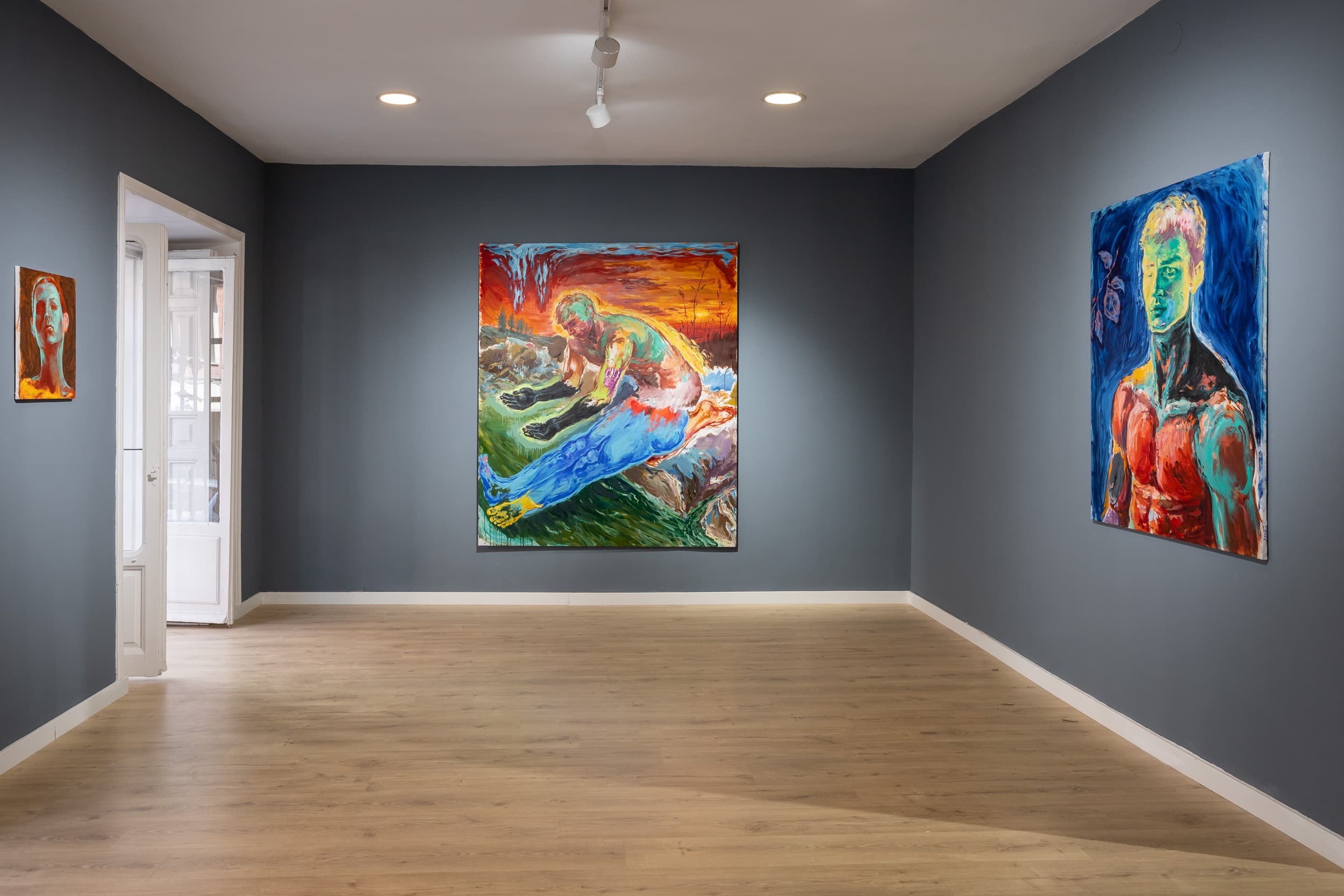
We might now play at creating a new expression “hand in hand” with Juana González (Puertollano, 1972). The title chosen for this first solo exhibition at ARMA Gallery, decided long after its contents had been conceived, with many of the works already completed or nearing completion, is Manos de hacer. We might understand it as “ways of making”. Juana is not one of those artists who enjoys launching into lengthy explanations when asked about her work; instead, she prefers to listen to what others see in it. And something people repeatedly point out is the striking presence of hands throughout her work, often followed by questions about what they mean.
The artist herself is the first to be surprised, since they do not refer to anything in particular, although it is true that they appear again and again. Take Narciso, for instance, the largest work in the exhibition: it is almost impossible not to notice the figure’s outstretched, offering arms first. Or consider all those limbs resting on the shoulders of the figures in her Apoyos. González herself might be more struck by her recurring return to mythology and references to classical painting. As she shows me her latest works, I hear her mention Velázquez and Juan de Juni, names that are always close at hand (let us finally leave Neo Rauch behind!). In this particular case, the monumental painting is a celebration of youth and an invitation to wait, with the hands cupped as though expecting water, another familiar element in the artist’s work, to fall and fill them.
Hands catch our attention even in another painting entitled Pelo, where they emerge like branches from the lower part of the composition. A pair of hands, taken from a detail of the painting Abrazo, was also used to illustrate the catalogue for Entremos más adentro en la espesura, an exhibition held some years ago at Sala de Arte Robayera in Miengo. Likewise, Manos (the work could hardly have been called anything else), from 2024, was chosen to represent González when she was honoured as guest artist at the MARTE art fair.
There is no doubt that Juana González’s faces can appear contemplative. We do not know, and the painter gives us the freedom to imagine, whether her figures are real people or inhabitants of a dreamlike, half-awake world that begins to haunt us; whether they belong to the present or to another time. What is certain, however, is that their hands reveal more about who they are and what they intend. And this inevitably brings us back to González’s own hands, the beginning and end of everything we see: the hands of the artist as maker, the “artist’s hand” that leaves its mark through a distinctive style and language.
“I keep thinking about it,” she explains, “and Manos de hacer refers not only to my characters, but also to the hands of the creator. Those that have the ability to materialise an artist’s thoughts into works. Those capable of handling the material, in my case paint, and drawing out its full potential. The hands that manipulate paint and transform it into a vehicle for thought and emotion.”
And what can we say about Juana González’s own deft hand at work? Is there not an evident shift in a practice that has always been characterised by an unsettling use of colour, tangled brushwork, agitated and complex compositions, and an extraordinary energy that connects directly with the workings of the unconscious? It is no coincidence that her forthcoming first major institutional exhibition in Madrid, at CentroCentro, which will overlap with this exhibition, is entitled Indómita pintura.
The artist pauses and admits that a change in support, moving from canvas to linen, has brought greater spontaneity and expressionism to the work. There is no longer the same need to work and rework the surfaces so intensely. The brush, connected to the brain through the arm and, of course, the hand, moves freely across the surface of the painting, with greater speed, much like our thoughts or dreams move through our minds before we have time to put them in order.
It is this intuition that we can finally say connects so precisely with González’s artistic practice. From here on, allow yourselves to be guided by the titles and seek your own interpretation among the clues Juana González scatters throughout the gallery, across works of the most varied formats, like breadcrumbs marking a path. Do not be afraid of getting lost or getting it wrong.
You are in good hands.
* Javier Díaz-Guardiola (Madrid, 1976) is a journalist, exhibition curator and art critic. He is currently coordinator of ABC Cultural (Diario ABC), editor-in-chief of ABCdeARCO, and author of the art blog Siete de un golpe.